For over 50 years, Lapmaster has served the precision optics industry through innovative design and manufacture of high-quality precision finishing systems and solutions. Our equipment and expertise is well known throughout the industry and serves some of the most demanding optics & electro-optics labs worldwide.
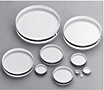
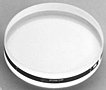
Lapmaster offers a wide range of Optical Flats that complement our Monochromatic Light source systems.
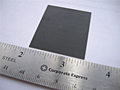
Our Optical Flats (1-sided or 2-sided) are available in standard diameters starting at 1” and go thru to 12”.
We offer Fused Quartz as our primary material (best overall accuracy due to thermal stability), although Pyrex and Zerodur materials are supplied upon request.
In our Optical Flat Reconditioning department, you will find the latest and most accurate machines designed primarily for the production finishing and reconditioning of high quality plano-optics; such as proof flats, prisms, filters, windows and ring laser gyroscope blanks. Our Optical Technicians have years of experience and are here to service your optical reconditioning requirements. Let Lapmaster show you how this service can save you time and money. Send us your optical flats and other plano optics for a free evaluation. We'll inspect them and return them to you with a complete report and cost quotation without obligation. Contact us today to learn more.
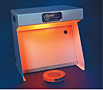
For over 50 years, Lapmaster has served the precision optics industry through innovative design and manufacture of high-quality precision finishing systems and solutions. Our equipment and expertise is well known throughout the industry and serves some of the most demanding optics & electro-optics labs worldwide. Lapmaster Monochromatic Light Sources and Optical Flats are used for fast and accurate optical inspection of lapped surface flatness.
Our Monochromatic Light sources are available in both 115 V and 220 V versions. The systems sold to support maximum diameters of 6”, 12”, 13” or 16”.
The Lapmaster light sources are also available in configurations that support either Helium Gas lighting (CP ...
(10)
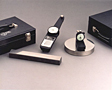
The Lapmaster Flatness Gauges provides a quick, reliable method of inspecting lap plates, polishing plates, surface plates and other large surfaces for flatness. The Flatness Gauge determines flatness by measuring the deviation from a straight line on a plane determined by the gauge body. This deviation, convex or concave, is then read directly in .0001 increments on a dial indicator (digital indicators also available).
Lapmaster manufactures flatness gauges with 4-3/8" between centers for plates up to 15" diameter and 9-3/8" between centers for plates of 20" diameter and larger. Lapmaster also manufactures a line of flatness gauges specially designed for use with dual face machining plates.
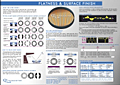
Flatness and Surface Finish Wall Chart for use with optical flats and monochromatic lights. Provides operator instructions and guidelines for reading lightbands.
Poster also features guides to:
-Optical Flat use and maintenance
-Monochromatic light use and maintenance
-Lapping plate flatness guide
-Surface finish description
-Conversion Tables
(2)
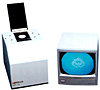
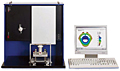
Lapmaster International’s SPI Interferometers with grazing incidence are an inexpensive, fast and accurate means for flatness inspection of ground, fine ground, lapped or polished parts. Flatness readings of non-reflective ground surfaces on all materials are clearly displayed as easily read fringes. Contact Lapmaster International to receive a light band (fringe) reading chart on an accompanying monitor. Eliminate secondary polishing operations, where polishing is performed only for the purpose of checking for flatness with optical flats (secondary polishing can alter flatness characteristics of the original lapped or ground surface). Whether used directly next to the lapping, fine grinding or grinding machine, or in the inspection ...
(2)
Instuments for Fast, High - Accuracy, Non - Contact Flatness Measurement of Precicsion Parts.
Instruments for non-contact flatness measurement of precision-manufacturing surfaces with sub-micron accuracy. They meet the requirements for objectively working measurement tools for the production and quality control of sophisticated components, such as those being utilized, for instance, in fuel injection systems, pumps or valves.
The measurements principle is based on interferometr y with grazing incidence of light. This set-up allows for flatness measurements of polished as well as non-reflective, rougher surfaces, which would not be measurable with traditional interferometers for flatness testing. An air gap between prism and part ...







.gif)
.gif)
.gif)
.gif)